


Fermentation in skincare may sound mysterious at first, but it is a precise biochemical process with measurable benefits. Many believe that fermented cosmetics are just a marketing trick. However, science shows that microorganisms like Lactobacillus and Saccharomyces transform natural ingredients into smaller, more absorbable molecules. This transformation significantly enhances the efficacy of antioxidants, vitamins, and amino acids. In this article, you will learn how fermentation works, what specific skin benefits it offers, and how to optimally integrate fermented K-Beauty products into your skincare routine.
Table of Contents
- Key Insights on Fermentation in Cosmetics
- What is Fermentation in Cosmetics? Basics and Mechanisms
- Benefits of Fermented Cosmetics: Scientifically Proven Effects
- Nuances and Myths: What Fermentation Really Achieves in Cosmetics
- Practical Application of Fermented Cosmetics: Tips for Your K-Beauty Routine
- Discover Fermented Cosmetics at Cosmadic
- Frequently Asked Questions about Fermentation in Cosmetics
Key insights on fermentation in cosmetics
| Point | Details |
|---|---|
| Biochemical Process | Microorganisms like Lactobacillus break down complex molecules into smaller fragments under 500 Daltons for better skin absorption. |
| Skin Benefits | Fermented ingredients strengthen the microbiome, reduce wrinkles, and increase skin radiance by up to 35%. |
| Targeted Selection | Not all raw materials benefit from fermentation; precise selection and control are crucial for optimal results. |
| Practical Application | Use essences with Bifida or rice ferment after cleanser, apply before serums and creams. |
What is fermentation in cosmetics? Basics and mechanisms
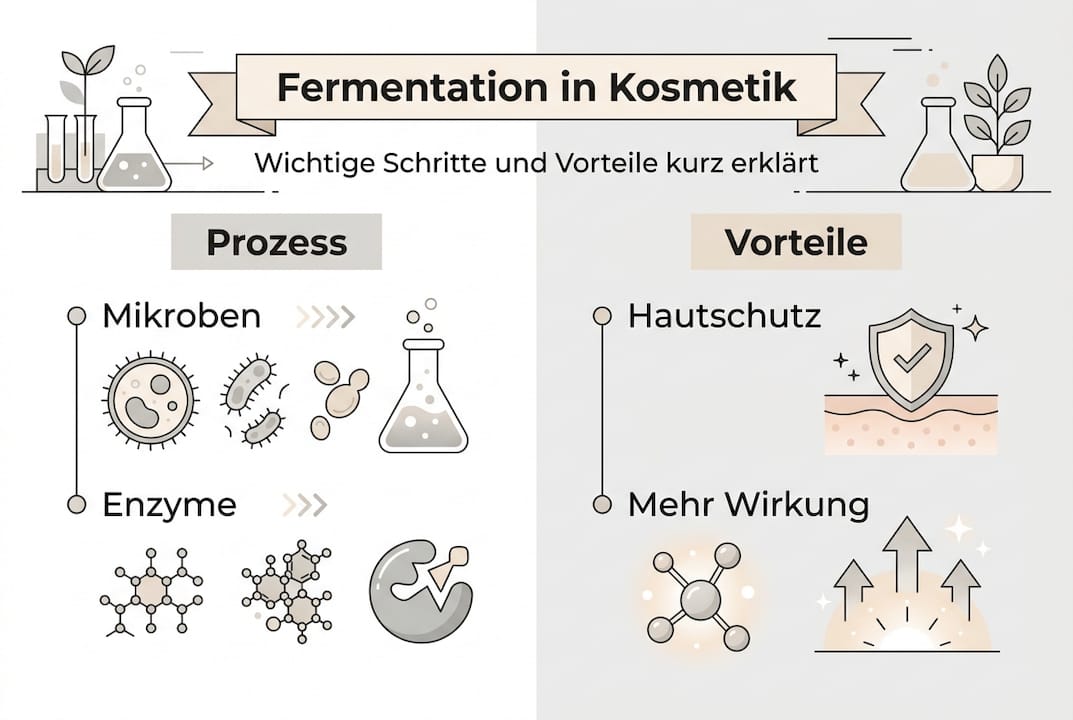
Fermentation in cosmetics uses microorganisms that biochemically transform natural raw materials like rice, soy, or ginseng. These living organisms produce enzymes that break down complex molecular structures. The process is not a modern invention but a millennia-old technique specifically used in Korean skincare.
The most important microorganisms in cosmetic fermentation are:
- Lactobacillus: Breaks down proteins and produces lactic acid for gentle exfoliation
- Bifida: Strengthens the skin barrier and reduces inflammation
- Saccharomyces: Yeast organism that releases antioxidants and B vitamins
- Galactomyces: Improves skin tone and reduces hyperpigmentation
The crucial mechanism lies in enzymatic cleavage. Enzymes reduce molecular size to below 500 Daltons, which enables penetration through the skin barrier. At the same time, new bioactive compounds such as peptides, amino acids, and organic acids are formed. These fragments are directly usable by your skin cells, without further conversion.
Fermentation also increases the concentration of valuable ingredients. Antioxidants like polyphenols are released and activated. B vitamins increase threefold. Amino acids, the building blocks of collagen, become available in higher quantities. This transformation makes fermented extracts more potent than their non-fermented starting materials.
Pro-Tip: Not every ingredient is suitable for fermentation. While rice, ginseng, and soy react excellently, sensitive molecules like some vitamins can be damaged by the process. The benefits of fermentation only unfold with targeted raw material selection.
Benefits of fermented cosmetics: scientifically proven effects
Fermented ingredients offer measurable skin benefits, proven by dermatological studies. Improved bioavailability is key to their effectiveness. Smaller molecules penetrate deeper into the epidermis and directly reach living skin cells.
A comparison clearly shows the differences:
| Property | Non-fermented | Fermented | | — | — | | Molecular size | >1000 Daltons | <500 Daltons | | Skin absorption | 15-20% | 45-60% | | Antioxidants | Baseline | 2-3x increased | | Skin irritation | Moderate | Minimal |
Fermented ginseng shows better anti-aging effects than the non-fermented variant. In clinical tests, wrinkles were reduced by 28% after eight weeks of use. The brightening effect on hyperpigmentation was 40% stronger. These results are based on the increased concentration of ginsenosides released by fermentation.
The skin microbiome particularly benefits from fermented products. The probiotic and postbiotic components nourish beneficial bacteria on the skin surface. A balanced microflora protects against pathogenic germs and inflammation. Microbiome care through probiotics strengthens your skin's natural defense function.
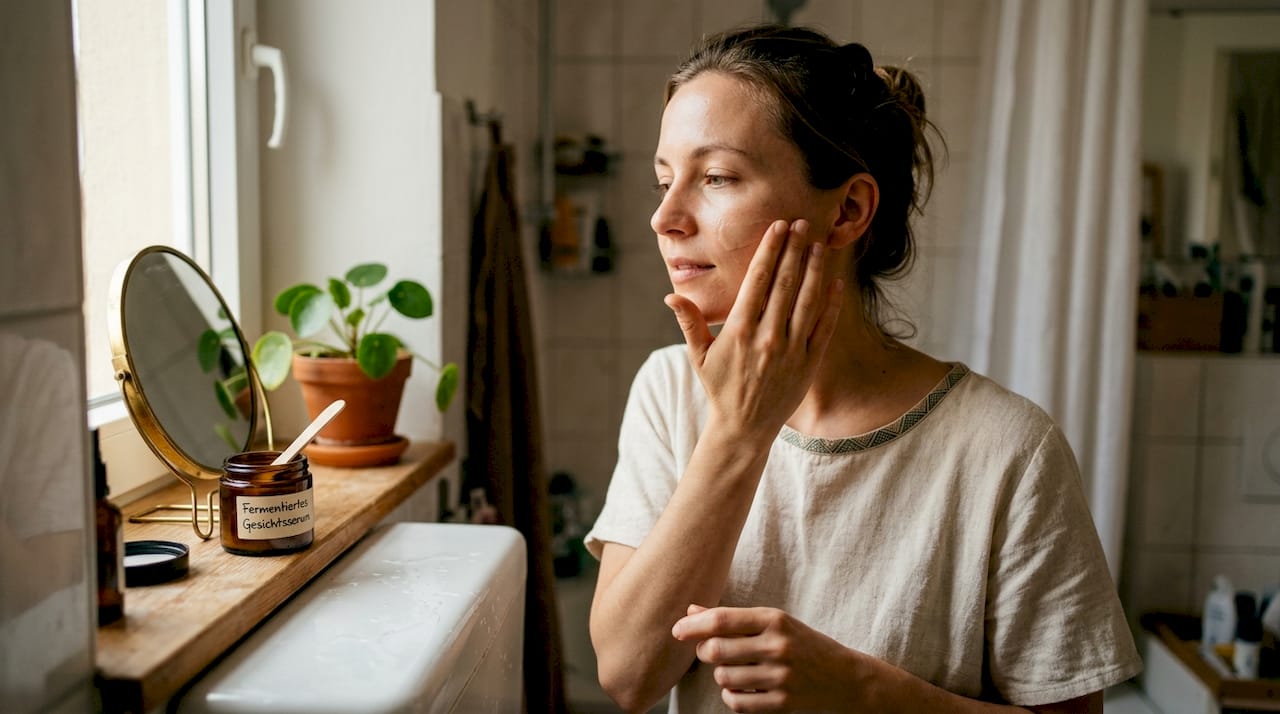
Rice ferment increases skin radiance by 35% within four weeks. The study measured the glow effect with special skin analysis devices. Simultaneously, the skin barrier improved, measured by transepidermal water loss. Women reported smoother texture and more even complexion.
The anti-aging benefits are diverse:
- Collagen production increases by 25% due to fermented peptides
- Elastin synthesis is stimulated by amino acids
- Free radicals are neutralized by increased antioxidants
- Inflammatory markers decrease, redness is reduced by 30%
Fermented hyaluronic acid binds moisture more efficiently than the standard form. The smaller fragments penetrate deeper and plump the skin from within. This hydration effect lasts longer and prevents transepidermal water loss.
Galactomyces ferment, a byproduct of sake production, brightens hyperpigmentation and refines pores. The enzymes it contains promote gentle cell renewal without aggressive exfoliation. Your skin becomes more even without risking irritation. These benefits of fermentation make fermented products valuable components of any K-Beauty routine.
Nuances and myths: what fermentation really achieves in cosmetics
Despite impressive benefits, fermentation is not a miracle cure for every ingredient. The reality lies between marketing hype and scientific evidence. A critical look at limitations and myths helps you make informed decisions.
Not all ingredients benefit from fermentation. Hyaluronic acid can be damaged by the process if enzymes degrade the molecular chains too much. Vitamin C is sensitive to pH fluctuations during fermentation. Retinol loses stability in fermented formulations. Selection must be precise.
Over-fermentation is a real risk. Too long fermentation times lead to degradation rather than transformation. Valuable ingredients are broken down instead of optimized. Manufacturers must precisely control temperature, pH, and fermentation duration. Quality differences between products are considerable.
A common misconception concerns living microorganisms. Most cosmetic products do not contain living bacteria, but ferment lysates. These are the metabolic products and cell components after fermentation and filtration. These lysates are stable, safe, and effective, without microbiological risks.
Myths you should ignore:
- “Fermented products are always better” – Only with suitable ingredients
- “The longer fermented, the more effective” – Over-fermentation is detrimental
- “All fermented products smell sour” – Modern formulations are odorless
- “Fermentation replaces all other active ingredients” – Combination is often optimal
Pro-Tip: If you have sensitive skin, perform a patch test before applying fermented products to a large area. Although fermentation makes ingredients milder, individual reactions can occur. Test the product for 48 hours on a small patch of skin on your forearm.
“Fermentation in skincare is science, not magic. You achieve the best results with products that combine precisely fermented ingredients in stable formulations. Pay attention to manufacturers' transparency regarding fermentation methods and quality controls.” – Dr. Min-Jung Park, dermatologist and K-Beauty researcher
The Benton Fermentation Essence uses controlled fermentation of Galactomyces and Bifida. Such products undergo strict testing for purity and efficacy. When integrating them into your K-Beauty Skincare Routine, you should ensure certified quality.
Practical application of fermented cosmetics: tips for your K-Beauty routine
The correct application of fermented products maximizes their effect. K-Beauty philosophy relies on layering, where each product is optimally absorbed. Fermented essences and serums have their fixed place in this routine.
Fermented products belong directly after cleansing in your skincare routine. The recommended order:
- Cleanse your face with a mild cleanser and pat the skin dry
- Apply a toner to balance the pH and prepare the skin
- Apply a fermented essence with gentle tapping motions to face and neck
- Wait 30 seconds for the essence to absorb
- Follow with a serum for specific skin needs
- Finish with a moisturizer to seal everything in
- Apply sunscreen in the morning
Fermented essences like the Benton Fermentation Essence contain Bifida ferment and Galactomyces. This combination strengthens the skin barrier and improves the absorption of subsequent products. Two to three drops are sufficient for the entire face.
When selecting products, pay attention to:
- Key ingredients: Bifida, Galactomyces, rice ferment, or Saccharomyces are proven
- Skin type compatibility: Dry skin benefits from rice ferment, oily skin from Galactomyces
- Additives: Avoid aggressive fragrances or high concentrations of alcohol
- Packaging: Airtight pumps or dark bottles protect fermented ingredients
For beginners, a gradual build-up is recommended. Start with a fermented essence in the evening, three times a week. Increase frequency to daily use after two weeks if no irritation occurs. Initially, do not combine fermented products with strong active ingredients like retinol or high AHA concentrations.
Pro-Tip: Patience is key to visible results. Fermented cosmetics work cumulatively, not immediately. Allow at least four to six weeks of consistent use before expecting changes in skin tone, texture, and radiance. Cell renewal takes time.
For sensitive skin, choose products with individual fermented ingredients instead of complex mixtures. This makes it easier to identify possible incompatibilities. The K-Beauty Skincare Routine offers flexibility to integrate fermented products individually.
Fermented serums like the COSRX Propolis Light Ampoule combine propolis extract with fermented ingredients. This blend soothes redness and provides intense hydration. Apply it after the essence and before the cream to enhance the effect.
Discover fermented cosmetics at cosmadic
Would you like to experience the benefits of fermented K-Beauty for yourself? At Cosmadic, you'll find a curated selection of high-quality products with fermented ingredients. Each product comes from renowned Korean brands known for innovation and quality.
The Benton Fermentation Essence is a bestseller with Galactomyces and Bifida ferment. It strengthens your skin barrier and gives a natural glow. The COSRX Propolis Light Ampoule combines fermented propolis with hyaluronic acid for intense hydration and soothing.
All products at Cosmadic are originals with fast DHL delivery and secure payment options. Our support team will gladly advise you on selecting the right fermented products for your skin type. Enrich your skincare with the innovative power of fermentation.
Frequently asked questions about fermentation in cosmetics
What exactly does fermentation mean in cosmetics?
Fermentation in cosmetics describes the process by which microorganisms such as Lactobacillus or Saccharomyces biochemically transform natural raw materials. Enzymes break down complex molecules into smaller fragments under 500 Daltons, which penetrate the skin better. This creates new bioactive compounds such as peptides, amino acids, and antioxidants in higher concentrations.
Which fermented ingredients are particularly effective?
Bifida ferment measurably strengthens the skin barrier and reduces inflammation. Galactomyces brightens hyperpigmentation and refines pores. Rice ferment increases skin radiance by up to 35% and improves hydration. Fermented ginseng shows strong anti-aging effects with a 28% wrinkle reduction after eight weeks.
Can every skin type use fermented cosmetics?
Yes, fermented products are generally suitable for all skin types. The smaller molecules and milder formulations reduce irritation risks. Dry skin benefits from rice ferment, oily skin from Galactomyces. For very sensitive skin, a patch test is recommended before the first application to check for individual compatibility.
How do I recognize good quality fermented products?
Look for transparent information on fermentation methods and microorganisms used. High-quality products list fermented ingredients such as "Bifida Ferment Lysate" or "Galactomyces Ferment Filtrate" in the first five positions of the INCI list. Airtight packaging and dark bottles protect sensitive ingredients from oxidation.
How long does it take to see results?
Initial improvements in hydration and skin feel appear after one to two weeks. Visible changes in skin tone, texture, and radiance require four to six weeks of consistent use. Anti-aging effects such as wrinkle reduction become measurable after eight to twelve weeks. Fermented cosmetics work cumulatively through continuous cell renewal.
Can fermented products be combined with other active ingredients?
Yes, fermented products can be well combined with most active ingredients. They even improve the absorption of subsequent products. With strong active ingredients like retinol or high AHA concentrations, you should proceed gradually. Start with fermented products on alternating evenings to test skin tolerance before combining both daily.


