


Many believe that using numerous skincare products automatically leads to better skin. The truth, however, is surprisingly different. The order and technique of application determine the success or failure of your routine. This article will show you why the layering principle is scientifically sound and how to best use it for your skin between the ages of 20 and 45. You'll learn which mistakes to avoid and how to correctly combine high-quality K-Beauty products.
Table of Contents
- Key Insights into Layering in Skincare
- The Scientific Foundations and Benefits of Layering
- The Correct Order for Layering: Tips and Common Mistakes
- Benefits and Adaptations of Layering for Different Skin Types
- Discover High-Quality Layering Products at Cosmadic
- FAQ on Layering in Skincare
Key Insights into Layering in Skincare
| Point | Details |
|---|---|
| Correct Order | Applying from thin to thick improves active ingredient absorption and prevents product pilling on the skin. |
| Morning Routine | Sunscreen is always the last step in your morning skincare routine to ensure optimal UV protection. |
| Evening Routine | A barrier balm or oil as the final step seals in all active ingredients and maximizes nightly regeneration. |
| Combination Effect | Multiple complementary products strengthen skin function significantly more effectively than individual applications. |
| Individual Customization | Layering can be flexibly adapted to every skin type, from dry to sensitive to oily. |
The Scientific Foundations and Benefits of Layering
Korean skincare is based on a well-thought-out system that goes far beyond simple application. Clinical studies prove that the sandwich method with toner, serum, and moisturizer improves skin elasticity and reduces fine lines. These results are no coincidence but the outcome of targeted active ingredient combinations.
The basic rule is: from thin to thick. This order is crucial because lighter textures can penetrate deeper into the skin. Products applied from thin to thick significantly improve absorption and reduce the risk of skin reactions. If you start with a heavy cream, it forms a barrier that prevents subsequent active ingredients from reaching their target layers.
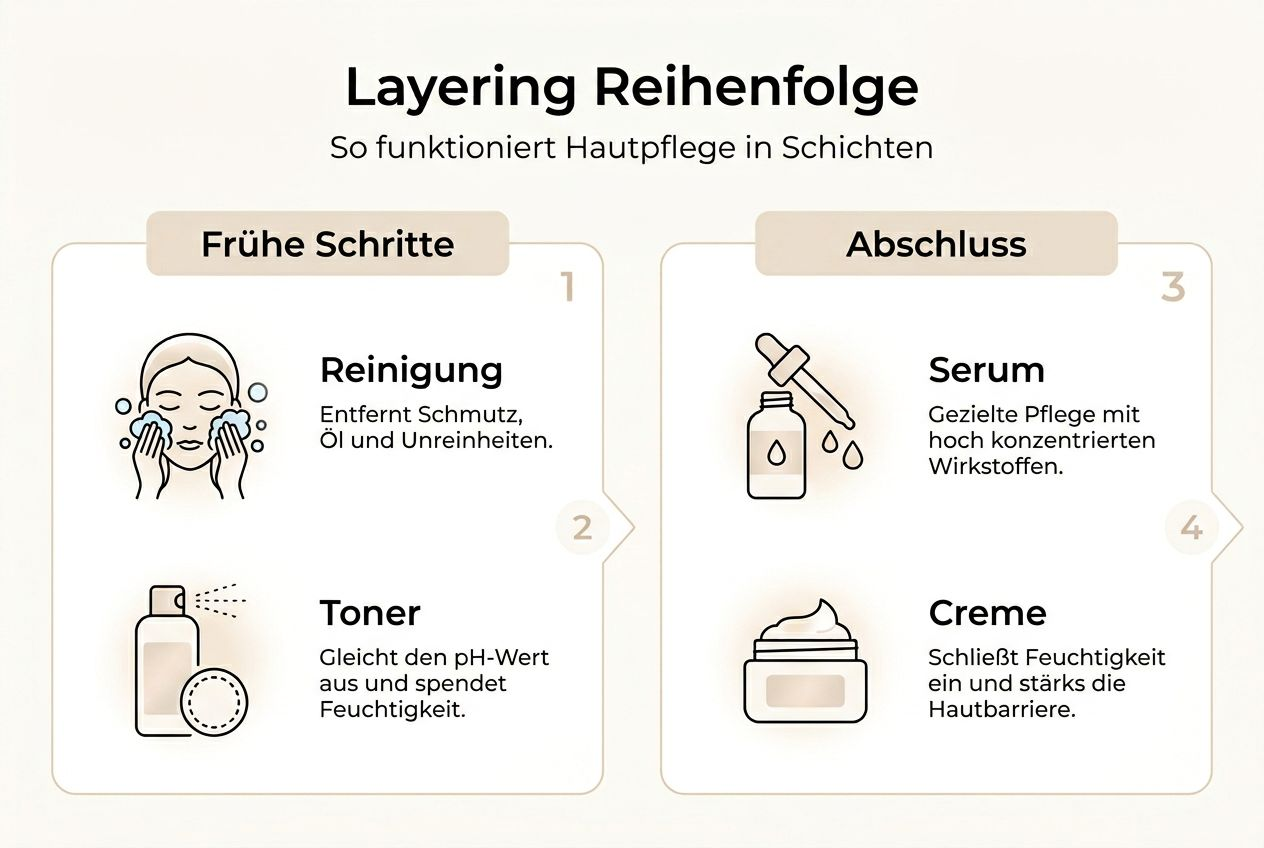
Science impressively shows that several complementary ingredients combined improve skin function more strongly than individual treatments. This synergistic effect arises because different active ingredients target different skin layers and mechanisms. A hyaluronic acid toner binds moisture in the upper layers, while a retinol serum works deeper and stimulates cell renewal.
Hydration forms the foundation of every successful layering routine. Toners and essences optimally prepare the skin by balancing its pH value and increasing its receptiveness. These first steps are not optional extras but essential components. Without adequate hydration, even high-quality serums cannot fully unleash their potential.
The gradual delivery of active ingredients through layering significantly minimizes irritation. Instead of overwhelming the skin with a high concentration, you distribute active ingredients across multiple layers. This method is particularly suitable for sensitive skin or when introducing new active ingredients like Vitamin C or AHA acids. You can learn more about the secrets behind Korean skincare in our detailed guide.
The most important scientific benefits at a glance:
- Improved penetration of active ingredients through optimized order
- Synergistic effects through targeted product combinations
- Reduced irritation potential with gradual application
- Longer duration of action by sealing in ingredients
- Strengthening of the natural skin barrier through multi-layered care
The Correct Order for Layering: Tips and Common Mistakes
The correct sequence of your products makes the decisive difference between visible results and wasted potential. Many users invest in high-quality products but unconsciously sabotage their effectiveness by using the wrong order. Here is the proven step-by-step guide for your daily routine.
Your morning layering sequence:
- Cleansing with a mild, pH-neutral cleanser
- Toner or essence for preparation and hydration
- Serum with targeted active ingredients for your skin needs
- Eye cream for the delicate eye area
- Moisturizer suitable for your skin type
- Sunscreen as the absolute last step with at least SPF 30
In the evening, your routine differs slightly but importantly. After cleansing, toner, and serum, apply moisturizer. As a final step, apply a barrier balm or oil to seal all previous layers and maximize nightly regeneration. This final occlusion prevents transepidermal water loss and keeps active ingredients where they should work.
Pro Tip: Wait 30 to 60 seconds between layers so that each product can be fully absorbed. This short break prevents pilling and significantly improves absorption. For serums with high concentrations of active ingredients, you can extend the waiting time to two minutes.
Typical mistakes you should definitely avoid are easy to spot. Pilling, uneven texture, or sudden irritations usually signal an incorrect product order. If your skin looks greasy after layering, even though you have normal to dry skin, heavy products are probably blocking the absorption of lighter textures.
Another common mistake is the placement of sunscreen. Sunscreen always belongs at the end of your morning routine, never before. If you apply products over it, you dilute the UV filter and drastically reduce the protection factor. This rule applies without exception, even to tinted creams or makeup with SPF.
Thick creams or oils at the beginning of the routine are counterproductive. They form a film that prevents thinner serums from penetrating the skin. If you want to use a facial oil in the morning, mix one to two drops into your moisturizer instead of applying it separately. In the evening, you can use oils more generously as the last layer.
For a detailed guide on the optimal product sequence, check out our Step-by-Step Skincare Routine. There you will also find recommendations for specific skin needs. Especially interesting for intensive night care are Overnight Masks, which work wonders as a final sealing step.
Benefits and Adaptations of Layering for Different Skin Types
Layering is not a rigid system but can be flexibly adapted to your individual needs. Each layer fulfills a specific function and can be varied depending on the skin condition. This adaptability makes the method so effective for the most diverse skin types.
Toners and essences provide the essential moisture boost that every skin needs. For dry skin, choose hydrating variants with hyaluronic acid or glycerin. Oily skin benefits from light, watery toners with soothing ingredients like Centella Asiatica. Sensitive skin requires low-irritation formulations without fragrances or alcohol.
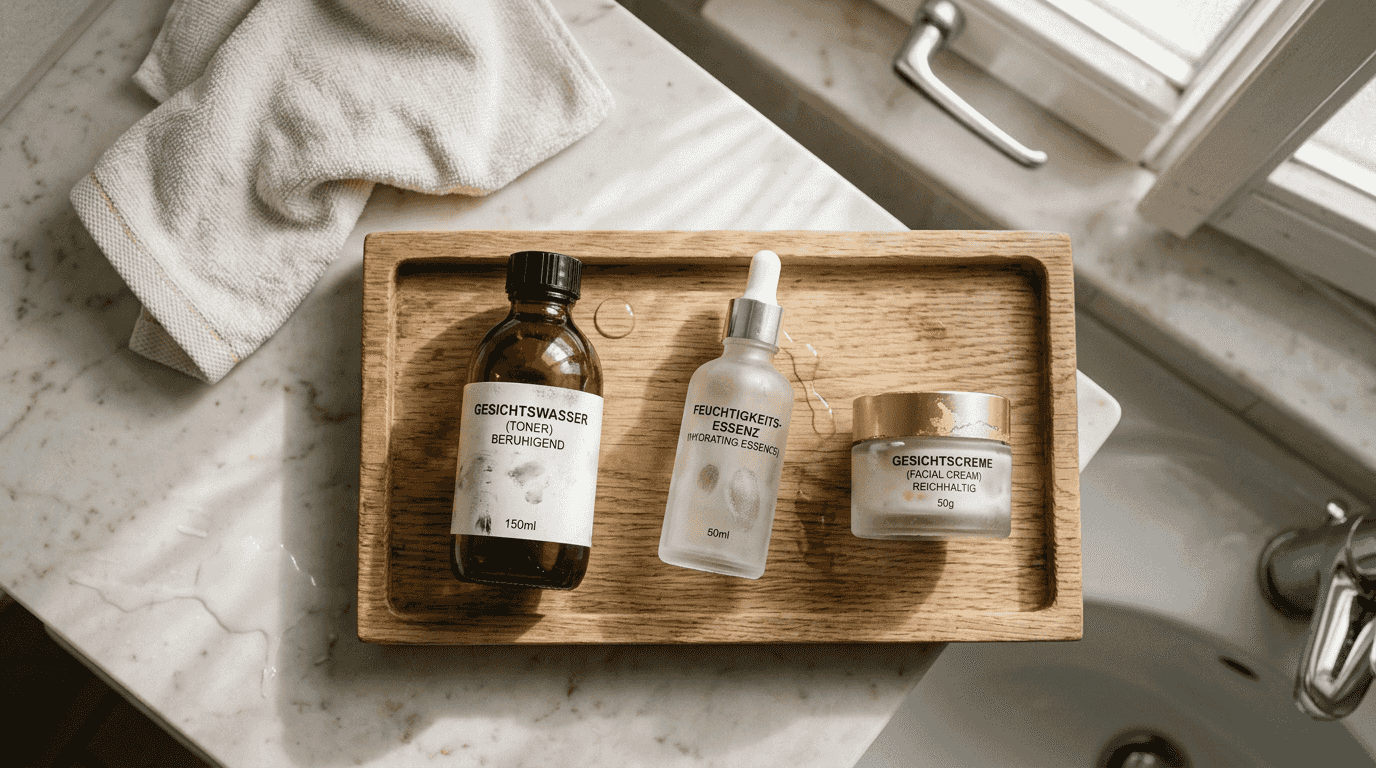
Serums are the powerhouses of your routine with highly concentrated active ingredients. For anti-aging, choose retinol, peptides, or niacinamide. For hyperpigmentation, vitamin C or arbutin can help. Dry skin loves ceramides and panthenol, while oily skin benefits from BHA acids. You can use different serums in the morning and evening to address specific skin problems.
Moisturizers strengthen the skin barrier and should be tailored to your skin type. The table shows you which textures are ideal for which skin type:
| Skin Type | Recommended Texture | Key Ingredients |
|---|---|---|
| Dry | Rich cream or balm | Ceramides, shea butter, squalane |
| Oily | Light gel or gel-cream | Hyaluronic acid, niacinamide, aloe vera |
| Combination | Light cream or emulsion | Glycerin, panthenol, green tea |
| Sensitive | Soothing cream without fragrances | Centella, madecassoside, allantoin |
| Mature | Anti-aging cream with peptides | Retinol, adenosine, collagen boosters |
Evening oils or barrier balms are particularly valuable for dry and sensitive skin. They seal all previous layers and prevent nocturnal moisture loss. Oily skin can skip this layer or apply it only to dry areas. In winter, however, all skin types benefit from this additional protective layer.
Pro Tip: Adapt your routine seasonally. In summer, you need lighter textures and more moisture; in winter, richer creams and oils. Your skin also changes with your cycle, stress, or environmental factors. Listen to your skin's signals and adjust accordingly.
Individual adaptation also extends to the number of layers. Minimalists can start with three to four products: cleanser, toner, moisturizer, and sunscreen. Those who want more intensive care can add serums, essences, and treatments. There is no right or wrong, as long as the basic principles are followed.
Special skin needs require specific adaptations:
- Acne-prone skin: Non-comedogenic products, BHA serums, light gels
- Rosacea: Soothing ingredients, no irritants, gentle textures
- Dehydrated skin: Multiple layers of moisture, hyaluronic acid in different molecular sizes
- Hyperpigmentation: Brightening serums in the morning, retinol in the evening, consistent sun protection
- First wrinkles: Preventive anti-aging active ingredients, peptides, antioxidants
For specific anti-aging strategies, read our guide on Korean Anti-Aging Tips. There you will learn how to optimize layering specifically for mature skin and which active ingredients truly make a difference.
The flexibility of the layering system allows you to react to acute skin problems. On days with redness, add a soothing essence. For dryness, double the moisture layers. After a peel, reduce active ingredients and focus on regeneration. This adaptability makes layering the most sustainable skincare method.
Discover High-Quality Layering Products at Cosmadic
Now that you understand the science and technique of layering, the next step is selecting the right products. At Cosmadic, you will find only original K-Beauty products of tested quality, perfectly suited for your layering routine.
For an introduction to serum layering, we recommend the Beauty of Joseon Hanbang Serum Kit. This discovery set contains four different serums in travel sizes, allowing you to test various active ingredients. This way, you can find out which combination best supports your skin without having to invest in full-size products immediately.
The Axis-Y Cera-Heart Duo Cream offers an innovative solution for those who want to adapt their moisturizing care to changing needs. This intelligent formulation can be dosed according to skin condition and is perfect as a middle layer in your routine.
Currently, you benefit from our free sheet mask promotion on orders over 60 euros. Sheet masks are a wonderful addition to layering, especially when your skin needs an extra boost of moisture or active ingredients. You can use them once or twice a week after toner and before serum.
FAQ on Layering in Skincare
How long does it take to see results with layering?
You'll notice initial improvements in hydration and skin feel within a few days. Visible changes in skin appearance, texture, or pigmentation take at least four to six weeks, as this corresponds to the natural skin renewal cycle. Patience and consistency are crucial for long-term success.
Which products must always be in the routine?
The absolute basics are cleanser, moisturizer, and sunscreen in the morning. Everything else can be added as needed. A toner significantly improves absorption and should ideally be part of your routine. Serums are optional but very effective for targeted skin problems.
What to do if skin reacts to layering?
Immediately reduce the number of products to the basics: cleanser, toner, and moisturizer. Introduce new products one by one at intervals of one to two weeks to identify the trigger. If reactions persist, consult a dermatologist, especially if burning or severe redness occurs.
Can layering also be used on sensitive skin?
Absolutely, layering is even particularly suitable for sensitive skin. Choose low-irritation products without fragrances, alcohol, or harsh active ingredients. The gradual delivery of active ingredients through several thin layers is gentler than a single highly concentrated product. Start with a few products and build up slowly.
How often should products be changed or adjusted?
Adjust your routine seasonally, at least when transitioning between summer and winter. Hormonal changes, stress, or climate changes can also require adjustments. If a product suddenly stops working after months, your skin may have gotten used to it. A temporary change for four to six weeks can help.
Do I really need to wait between layers?
Short waiting times of 30 to 60 seconds significantly improve absorption and prevent pilling. For serums with Vitamin C or retinol, a waiting time of one to two minutes is worthwhile so that the pH value can work optimally. If you're short on time in the morning, 30 seconds is the minimum. Detailed timing tips can be found in our step-by-step skincare routine.


