


Peptides are considered miracle active ingredients in modern skincare, yet their actual mode of action remains a mystery to many. While Korean cosmetic brands have long relied on innovative peptide formulations, women between 20 and 45 often wonder if these molecules really deliver on their promises. The answer lies in science: peptides activate cellular processes that boost collagen production, reduce expression lines, and sustainably improve skin structure. This article shows how different peptide types work, what technologies increase their effectiveness, and how to optimally integrate them into your skincare routine.
Table of Contents
- Key Findings on Peptides in Cosmetics
- Understanding Peptides: Mechanisms of Action and Effects in Cosmetics
- Challenges and Innovative Solutions for Peptide Formulations
- Clinical Evidence and Effects of Korean Peptide Serums
- Practical Guide: How to Optimize the Application of Peptide-Containing Cosmetics?
- Discover Exclusive Cosmetic Products with Peptide Effects
- Frequently Asked Questions about Peptides in Cosmetics
Key findings on peptides in cosmetics
| Point | Details |
|---|---|
| Quadruple Action | Peptides combat skin aging through collagen promotion, muscle relaxation, mineral transport, and enzyme inhibition. |
| Penetration Barriers | Large molecules require nanotechnologies such as liposomes or cyclization for effective skin absorption. |
| Superior Tolerability | Clinical studies show peptides surpass retinol in efficacy with better skin tolerability. |
| Korean Innovation | K-Beauty serums combine multiple peptide types with delivery systems for maximum anti-aging results. |
| Long-Term Benefits | Regular use strengthens skin firmness, elasticity, and hydration through cumulative effects. |
Understanding peptides: mechanisms of action and effects in cosmetics
Peptides are short chains of amino acids that act as messengers in the skin and specifically activate anti-aging processes. Their effectiveness is based on four primary mechanisms: signal peptides stimulate collagen and elastin production, carrier peptides transport minerals for repair, neurotransmitter inhibitor peptides relax muscles to reduce expression lines, and enzyme inhibitor peptides inhibit collagen degradation. These diverse approaches make peptides versatile tools in modern skincare.
Signal peptides like Palmitoyl Pentapeptide-4 send biochemical signals to fibroblasts, which then produce more collagen and elastin. This leads to firmer, more elastic skin and visibly reduces fine lines. Carrier peptides such as copper peptides transport essential minerals into deeper skin layers, where they accelerate repair processes and promote wound healing. Their role is similar to the role of essences in skincare, which optimally prepare active ingredients.
Neurotransmitter inhibitor peptides act like gentle botulinum toxin alternatives by inhibiting the release of acetylcholine. This relaxes facial muscles, significantly reducing expression lines around the eyes and forehead. Enzyme inhibitor peptides block matrix metalloproteinases, enzymes that degrade collagen. This inhibition keeps the skin structure intact longer and more resistant to age-related changes.
Combining different peptide types in one product creates synergistic effects that individual active ingredients cannot achieve. While signal peptides build new collagen, enzyme inhibitors simultaneously prevent its degradation. Neurotransmitter inhibitors relax the skin, while carrier peptides provide the necessary minerals for repair processes.
Pro Tip: Combine products with different peptide types for synergistic effects. A serum with signal peptides in the morning and a night serum with carrier peptides maximizes the regenerative effect over 24 hours.
Challenges and innovative solutions for peptide formulations
Despite their impressive mechanisms of action, peptides face a crucial hurdle: their molecular size. Poor skin permeability due to large molecular size requires nano-systems such as liposomes, ultrasound, or cyclized peptides for better stability and penetration. Without these technologies, many peptides remain on the skin's surface and have little effect.
The stratum corneum forms a natural barrier that only allows molecules under 500 daltons to pass through. Many effective peptides significantly exceed this limit, preventing their absorption into deeper skin layers. Additionally, peptides are sensitive to enzymes that degrade them on the skin's surface before they reach their target cells. This dual challenge makes innovative formulation technologies indispensable.
Liposomal encapsulation encloses peptides with lipid-like membranes that merge with the skin barrier and transport the active ingredients directly into deeper layers. This method simultaneously protects peptides from enzymatic degradation and prolongs their duration of action. Nanoparticle systems reduce the effective size of peptide molecules, allowing for better penetration through the stratum corneum.
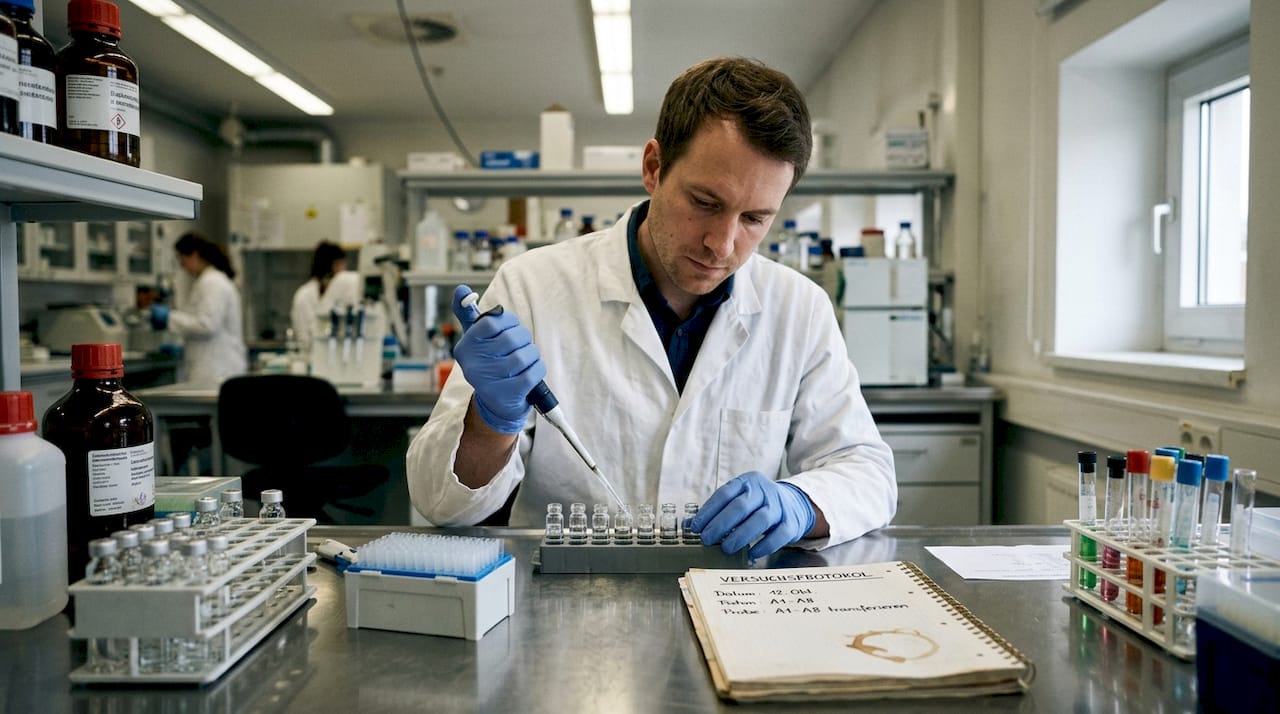
Cyclization changes the three-dimensional structure of peptides by linking their ends together. This not only increases stability against enzymes but also improves skin penetration. Cyclized Hexapeptide-9 (CHP-9) shows significantly better results than linear peptides through this modification. Microspicule systems, which are particularly common in Korean skincare, create microscopic channels in the stratum corneum for improved active ingredient absorption.
Ultrasound-assisted application uses sound waves to temporarily make the skin barrier more permeable. This method is particularly suitable for highly concentrated peptide treatments in professional settings. Transdermal patches with microneedle arrays offer another innovative solution by mechanically transporting peptides through the stratum corneum.
Pro Tip: When purchasing, look for products with nano-delivery systems for maximum effectiveness. Formulations that explicitly mention liposomal encapsulation or cyclized peptides offer significantly better penetration than conventional serums.
Clinical evidence and effects of Korean peptide serums
Current research provides impressive evidence for the superiority of peptides over established anti-aging active ingredients. A randomized study with Cyclized Hexapeptide-9 showed a significant reduction in crow's feet and forehead wrinkles, superior to retinol. After 56 days of regular use, wrinkle depth was reduced by an average of 18.3% and wrinkle area by 15.7%, while skin tolerability was significantly better than with retinol treatments.
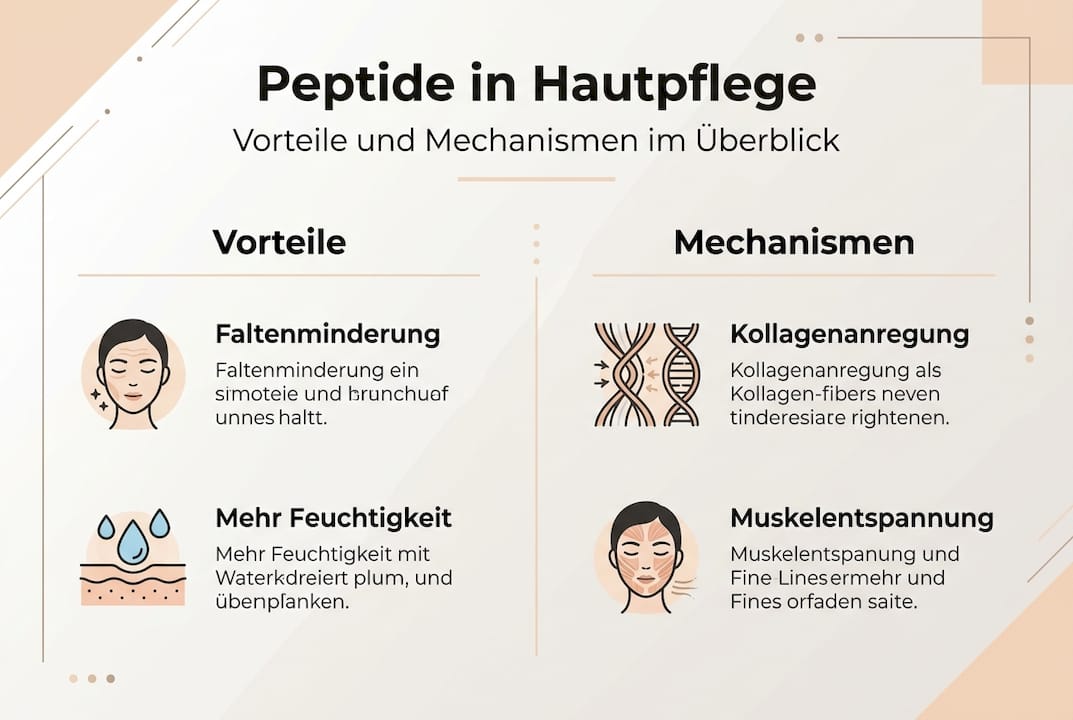
The following table shows a direct comparison between CHP-9 and Retinol:
| Metric | CHP-9 after 56 days | Retinol after 56 days |
|---|---|---|
| Wrinkle depth crow's feet | -18.3% | -12.1% |
| Wrinkle area forehead | -15.7% | -10.4% |
| Skin roughness | -21.2% | -14.8% |
| Tolerability (Irritation) | 3.2% subjects | 28.7% subjects |
Further clinical studies confirm the versatility of peptide formulations. OS-01 peptide increases hydration by 32% and measurably improves skin elasticity after eight weeks of use. These results show that peptides not only reduce wrinkles but also optimize fundamental skin parameters such as moisture and elasticity.
Korean cosmetic brands utilize these findings by developing peptide boosters that combine multiple mechanisms of action. Products like the Beauty of Joseon Revive Serum contain both signal peptides for collagen building and neurotransmitter inhibitors for muscle relaxation. These advantages of Korean cosmetics lie in intelligent formulations that combine scientific evidence with traditional plant extracts.
The cumulative effect of peptides is particularly evident with long-term use. While initial effects become visible after four weeks, skin firmness and elasticity reach their maximum after three to six months. This progressive improvement distinguishes peptides from the short-term effects of moisturizers and makes them ideal active ingredients for sustainable anti-aging strategies.
Pro Tip: Use peptide serums as a gentle alternative to retinol for sensitive skin. Clinical data show comparable or better results with significantly lower irritation rates, ideal for women with reactive skin.
Practical guide: how to optimize the application of peptide-containing cosmetics?
Integrating peptides into your daily routine requires an understanding of the order and combination of products. For women aged 20 to 45: prevention against collagen degradation from 20; Korean peptide serums are ideal, combinable with hyaluronic acid and Vitamin C, to be applied morning and evening. Correct application maximizes the effect and accelerates visible results.
Follow these step-by-step instructions for optimal peptide absorption:
- Cleanse your face thoroughly with a mild cleanser to remove dirt and oils that hinder penetration.
- Apply a hydrating toner to balance pH and prepare the skin for active ingredients.
- Apply the peptide serum to still slightly damp skin, as moisture improves absorption.
- Gently pat the serum in without rubbing, to avoid damaging the delicate peptide molecules.
- Wait 60 seconds before applying other products so that the peptides can be fully absorbed.
- Seal with a moisturizer to lock in the active ingredients and prevent transepidermal water loss.
The combination of peptides with other active ingredients creates synergistic effects. Hyaluronic acid binds moisture and creates an optimal environment for peptide activity. Vitamin C additionally boosts collagen production and provides antioxidant protection. Niacinamide improves the skin barrier and increases the retention of peptides in deeper layers.
Note these important dos and don'ts when choosing products:
- Choose serums with at least two different peptide types for comprehensive action
- Look for airtight packaging, as peptides are sensitive to oxidation
- Prefer products with a pH value between 4.5 and 6.0 for optimal stability
- Avoid formulations with high alcohol concentrations that can destabilize peptides
- Do not combine with strongly acidic peels (AHA/BHA over 10%) that can degrade peptides
- Store peptide products in a cool, dark place to maintain their effectiveness
For women aged 20 and over, peptides serve as prevention by compensating for the natural collagen loss that already begins in the mid-20s. From age 30, the application focuses on regenerating existing lines and loss of firmness. From age 40, combine peptides with more intensive active ingredients for comprehensive anti-aging strategies.
Pro Tip: Patience pays off. Visible results often appear after several weeks. Peptides work at a cellular level and need time to boost collagen production and improve skin structure. Consistent use for at least eight weeks is crucial.
Discover exclusive cosmetic products with peptide effects
Now that you understand the science behind peptides, it's time to put this knowledge into practice. On cosmadic.de, you'll find carefully curated Korean peptide serums that combine cutting-edge formulation technologies with clinically proven active ingredients. The Hanbang Serum Discovery Kit offers you four different peptide formulations to try, so you can find the perfect combination for your skin's needs.
For targeted anti-aging care, we recommend the Light On Serum Centella Vitamin C, which combines peptides with regenerating Centella and brightening Vitamin C. This synergy simultaneously addresses wrinkles, pigmentation, and skin elasticity. As a special welcome gift, you'll receive a free sheet mask with orders over 60 Euros to complement your peptide routine with intense hydration.
Frequently asked questions about peptides in cosmetics
What are peptides in cosmetics and why are they important?
Peptides are short chains of amino acids that act as signaling molecules in the skin and control cellular processes. They activate collagen production, inhibit muscle contractions, and transport minerals for repair processes. Their importance lies in their targeted fight against skin aging at a molecular level, without causing the irritation associated with conventional anti-aging active ingredients. For women between 20 and 45, they offer preventive and regenerative care.
How do different peptide types differ in skincare?
Signal peptides stimulate fibroblasts to produce collagen and elastin for firmer skin. Carrier peptides transport copper and other minerals into deeper layers for accelerated regeneration. Neurotransmitter inhibitor peptides block muscle contractions and reduce expression lines similar to botulinum toxin. Enzyme inhibitor peptides prevent the degradation of collagen by matrix metalloproteinases, preserving skin structure longer.
Can I combine peptides with retinol or vitamin c?
Peptides combine excellently with Vitamin C, as both promote collagen production and reinforce each other. Apply Vitamin C with peptides in the morning for antioxidant protection, and peptides alone or with low-dose retinol in the evening. When combining with retinol, start with low concentrations (0.25 to 0.5%) and gradually increase to avoid irritation. Alternatively, use peptides on retinol-free days for gentler anti-aging care.
How long does it take for peptides in cosmetics to show visible effects?
Initial improvements in skin moisture and texture become apparent after four to six weeks of regular use. Significant reduction in wrinkles and improved skin firmness are visible after eight to twelve weeks, as collagen regeneration takes time. Peptides achieve maximum results after three to six months of continuous use due to cumulative effects. Consistency is crucial, as peptides reprogram cellular processes long-term rather than producing short-term cosmetic effects.


