


Face masks are a popular component in skincare routines. But did you know that incorrect application of face masks can damage the skin more than no care at all? Many users unknowingly make mistakes that reduce effectiveness or even cause irritation. This guide will show you step-by-step how to use face masks effectively and safely to get the most out of your skincare.
Table of Contents
- What you need to know before applying face masks
- Choosing the right mask type for your skin type
- Correct application of face masks step by step
- Common mistakes in application and how to avoid them
- Expected results and realistic timeframes
- Discover the best K-Beauty face masks at Cosmadic
- Frequently asked questions about using face masks correctly
Key Takeaways
| Point | Details |
|---|---|
| Regular cleansing is fundamental | Thorough skin cleansing before the mask significantly improves ingredient absorption |
| Choose mask type appropriate for skin type | Different skin types require specific active ingredients for optimal results |
| Adhere strictly to application times | 10 to 20 minutes is ideal; longer wear can irritate skin |
| Apply moisturizer after mask | Protects the skin and seals in active ingredients for long-lasting effects |
| Avoid common mistakes | Wearing too long, insufficient cleansing, and not rinsing are the biggest stumbling blocks |
What you need to know before applying face masks
Face masks are a wonderful addition to your daily skincare, but they don't replace it. They deliver concentrated active ingredients for specific skin needs. Ideally, apply them once or twice a week to avoid overstressing the skin.
Thorough cleansing before the mask is essential. Active ingredients can only penetrate optimally on clean skin. Thoroughly cleansing the skin before the mask significantly improves the absorption of active ingredients. Remove makeup, dirt, and sebum with a gentle cleanser suitable for your skin type.
Different mask types require different preparation. For sheet masks, cleansing is sufficient. For peel-off or clay masks, a gentle peel beforehand can be useful to remove dead skin cells. Pay attention to your skin's needs and don't overdo it.
Pro Tip: If you use lip masks, gently exfoliate your lips beforehand with a soft toothbrush. This removes dry skin flakes and allows the active ingredients to penetrate better. Avoid the delicate skin around the lips.
Key preparation steps at a glance:
- Wash face thoroughly with a suitable cleanser
- Completely remove makeup, including eye makeup
- If necessary, perform a gentle exfoliation
- Pat skin dry, do not rub
- Tie hair back so the mask doesn't get into it
Integrate face masks effectively into your K-Beauty Skincare Routine. The correct order in skincare makes the difference between mediocre and excellent results.
Choosing the right mask type for your skin type
Choosing the right mask is crucial for the success of your skincare. Skin types require specific masks with suitable active ingredients to achieve optimal results. An incorrect choice can, in the worst case, even be counterproductive.
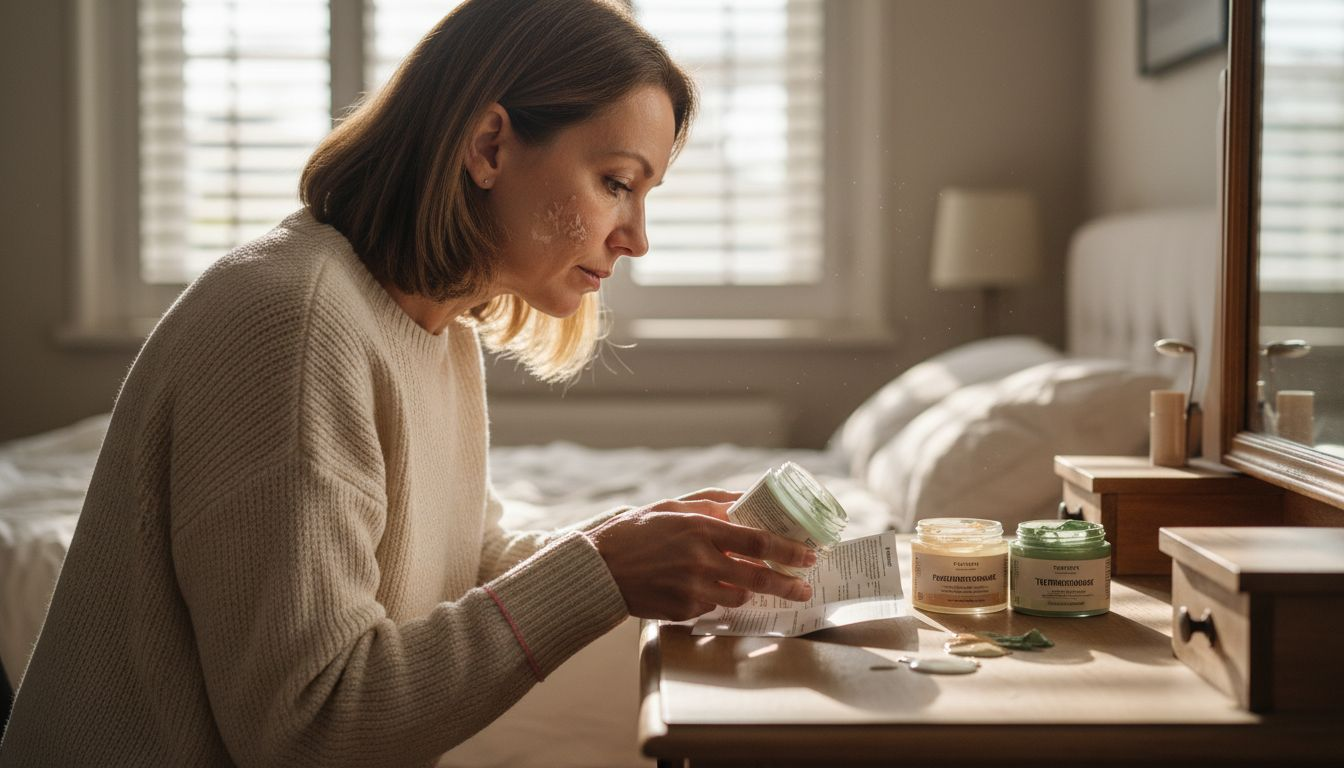
Dry skin needs intense moisture. Moisturizing masks with hyaluronic acid, aloe vera, or ceramides are perfectly suited. These active ingredients bind water in the skin and strengthen the skin barrier. Sheet masks with hydrating serums are often the best choice here.
Oily and blemish-prone skin benefits from purifying masks. Clay, salicylic acid, and tea tree oil help absorb excess sebum and refine pores. Peel-off masks or clay masks work particularly well here. Make sure the mask does not dry out the skin too much, otherwise the skin will produce even more sebum.
Sensitive skin requires especially gentle care. Soothing masks with chamomile, calendula, Centella Asiatica, or healing clay have anti-inflammatory and soothing effects. Avoid aggressive ingredients such as alcohol or strong fragrances. Always test new masks on a small patch of skin first.
Important selection criteria by skin type:
- Dry skin: Hyaluronic acid, glycerin, ceramides, rich oils
- Oily skin: Clay, activated charcoal, salicylic acid, tea tree oil
- Sensitive skin: Chamomile, aloe vera, Centella Asiatica, fragrance-free
- Combination skin: Combination of different masks for different facial areas
- Mature skin: Collagen, peptides, retinol, vitamin C for anti-aging effects
To determine your skin type, observe your skin over several days. You can find further inspiration in our guide to Korean mask recommendations. Detailed information on mask types and active ingredients will help you make your selection.
Correct application of face masks step by step
Now let's get practical. Correct application determines the success of your facial care. Follow these steps for optimal results.
-
Thoroughly cleanse your face: Use a cleanser that suits your skin type. Remove all makeup and dirt residues. Gently pat your face dry with a clean towel.
-
Apply mask evenly: Distribute the mask evenly over your face with clean fingers or a brush. Avoid the eyes and lips, as the skin there is particularly sensitive. For sheet masks, ensure they lie flat without air bubbles.
-
Observe application time: Adhering to application times of 10 to 20 minutes is important for effectiveness and skin protection. Longer wear does not bring better results; instead, it can dehydrate and irritate the skin. It's best to set a timer.
-
Remove mask correctly: Wash-off masks are gently rinsed off with lukewarm water. Massage in circular motions to stimulate blood circulation. Carefully peel off peel-off masks from bottom to top. Sheet masks can simply be removed.
-
Apply moisturizer: Seal in the active ingredients with a moisturizer suitable for your skin type. This prevents the skin from drying out and maximizes the caring effect. For sleeping packs, you can skip this step.
Pro Tip: Use the application time wisely. Lie back and relax, listen to music, or meditate. Stress reduces the effectiveness of skincare, while relaxation enhances it. Your skin will thank you.
Integrate masks meaningfully into your step-by-step skincare routine. Specific tips for sheet mask application can be found in our separate guide. All details on correct application times for face masks are scientifically sound.
Common mistakes in application and how to avoid them
Even experienced users sometimes make mistakes that diminish the effect of face masks or even cause harm. Here are the most common pitfalls and how to avoid them.
Wearing the mask for too long is one of the biggest mistakes. Many people think that longer application times lead to better results. The opposite is true. The skin can only absorb a certain amount of active ingredients. After that, the mask begins to draw moisture from the skin, leading to dryness and irritation.
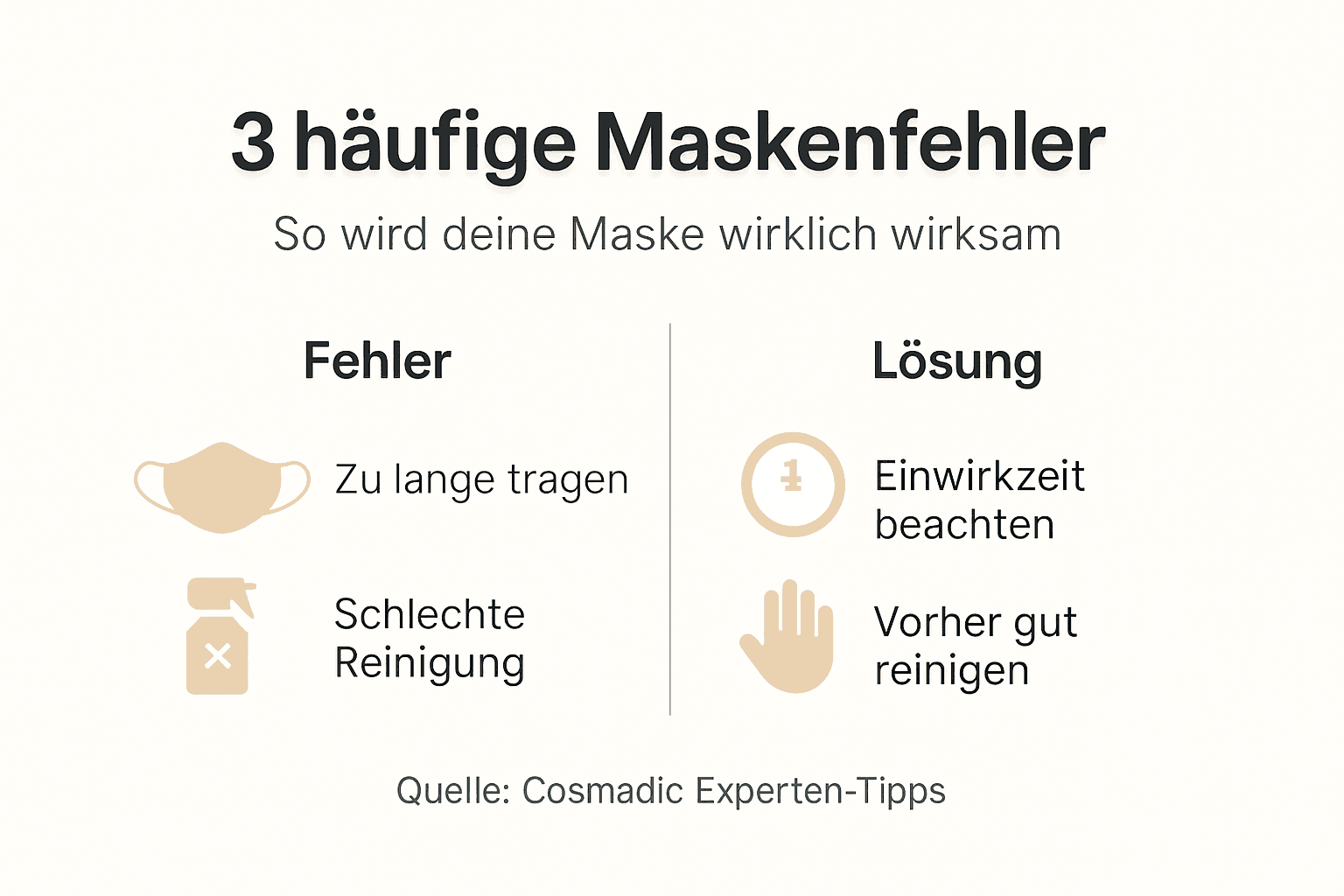
Insufficient cleansing before the mask blocks the absorption of active ingredients. If dirt, sebum, or makeup residue remains on the skin, the active ingredients cannot penetrate. Always invest enough time in thorough facial cleansing before the mask.
Not washing off wash-off masks leads to problems. Some masks, especially clay or peel-off types, contain ingredients that can remain on the skin and cause irritation. The three main mistakes are too long application time, insufficient cleansing, and not rinsing off wash-off masks.
Touching or moving the mask during application is counterproductive. This transfers bacteria from your hands to your skin, and the mask no longer sits optimally. Once applied, leave the mask alone.
“The most common mistakes in mask application arise from impatience or lack of preparation. Take your time with your skincare and follow the instructions precisely. Your skin will thank you with a radiant complexion.” – K-Beauty Experts
How to avoid these mistakes:
- Set a timer for the recommended application time
- Always cleanse your face thoroughly before the mask
- Read the product instructions carefully
- Completely wash off wash-off masks
- Do not touch the mask during the application time
- Do not use expired products
Further tips on common skincare mistakes can be found in our comprehensive guide. Detailed information on how to avoid mistakes in mask application will help you further.
Expected results and realistic timeframes
It's important to have realistic expectations so as not to be disappointed. Face masks are not miracle cures, but with regular use, they show significant improvements.
Immediately after the mask, the skin feels softer, smoother, and more nourished. The complexion appears fresher, and the skin is better hydrated. These immediate effects last for a few hours to a day.
Regular use once or twice a week shows results after one to two weeks. The complexion becomes more even, impurities are reduced, and skin texture refines. The skin appears healthier and more radiant overall.
Sleeping packs measurably improve skin hydration overnight. These special masks work while you sleep, providing intensive nourishment. In the morning, the skin is plump, fresh, and well-hydrated. They are a valuable addition, especially during the winter months.
Long-term use over several months can sustainably improve the skin's appearance. Fine lines are softened, pigment spots are lightened, and skin elasticity is increased. Patience and consistency are key to success here.
| Period | Expected Results | Recommended Frequency |
|---|---|---|
| Immediately after use | Softer skin, fresher complexion, better hydration | As needed |
| After 1-2 weeks | More even complexion, fewer impurities | 1-2 times per week |
| After 4-6 weeks | Refined pores, more even skin texture | 2 times per week |
| After 3 months | Improved skin elasticity, reduced fine lines | 2-3 times per week |
Realistic expectations reduce frustration and help you stay consistent. Skincare is a marathon, not a sprint. Every skin reacts differently to active ingredients, so give your skin time.
Learn more about Overnight Masks benefits in our specialized article. Detailed information on expected results from regular mask use is based on sound studies.
Discover the best K-Beauty face masks at Cosmadic
You now know how to apply face masks correctly. The next step is to find the perfect products. At Cosmadic, you'll find a wide selection of high-quality K-Beauty masks, specially developed for different skin types.
Our product recommendations are based on proven active ingredients from Korea, known for their effectiveness and quality. From moisturizing sheet masks to purifying clay masks and intensive overnight packs, you'll find everything your skin needs.
We also offer easy guidance for beginners. Our K-Beauty beginner routine helps you find the right products for your skin type. Also, check out our Korean mask recommendations for inspiration.
Frequently asked questions about using face masks correctly
How often should I use face masks?
Once or twice a week is ideal for most skin types. Too frequent use can overstress the skin, especially with intensive masks. For very dry skin, you can use hydrating masks more often, but pay attention to how your skin reacts.
Can I use multiple face masks at the same time?
Yes, this is called multi-masking and is a popular K-Beauty technique. Apply different masks to different areas of your face, depending on your needs. For example, a clay mask on the T-zone and a moisturizing mask on the cheeks. Make sure the masks don't mix.
What should I do if my skin is irritated after the mask?
Rinse the mask off thoroughly immediately and apply a soothing cream. Avoid this product in the future. Always test new masks on a small area on your neck or behind your ear before applying them to your entire face. If reactions persist, consult a dermatologist.
How do I store sheet masks correctly?
Store sheet masks in a cool, dry place away from direct sunlight. Stored in the refrigerator, they provide an extra refreshing effect. Pay attention to the expiration date and use opened packages within 24 hours, as they can dry out.
Which face mask is best for acne?
Purifying masks with salicylic acid, clay, or tea tree oil are particularly effective for acne. They absorb excess sebum and fight bacteria. Avoid overly aggressive products that severely dry out the skin. Balanced care with additional hydration is important to protect the skin barrier.
Can I use face masks on sensitive skin?
Yes, absolutely. Choose masks with soothing ingredients like chamomile, Centella Asiatica, or aloe vera. Avoid aggressive active ingredients, alcohol, and strong fragrances. Always test new products on a small area first and observe the reaction over 24 hours before applying them broadly.
Recommendation
- Avoid Skincare Fails: The most common mistakes in skincare – and how to do them better | cosmadic
- Overnight Masks: The secret tip for intensive care while you sleep | cosmadic
- Sheet Masks: Instant home skincare | cosmadic
- SOME BY MI Super Matcha Pore Clean Clay Mask 100g | cosmadic
- 7 Essential Tips: Perfume Use Checklist for Every Enthusiast – Pure Parfum


